Latest News

Sarens transports military vessel in Kazakhstan

0

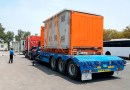
Sarens in Kazakhstan successfully completed the complex transport of the military vessel Dinmukhamed Kunaev in Uralsk, West Kazakhstan.

The operation demonstrated the team’s expertise in executing highly demanding heavy transport projects with precision, control, and extensive engineering coordination.

Weighing approximately 600 tonnes, the vessel was transported over a distance of around 3 kilometres, travelling from the dock to its designated unloading location. Given the exceptional scale of the cargo, the operation required detailed planning and seamless coordination across every stage of execution.

For the transport, Sarens deployed Kamag K25 modular trailers configured with 40 axle lines across two Power Pack Units (PPUs). This configuration ensured optimal load distribution and manoeuvrability, allowing the vessel to be safely transported through the city’s infrastructure.

In addition to the transport itself, Sarens Kazakhstan also carried out the lifting operations required to position the vessel onto the transport platform, as well as the controlled raising and lowering of the ship using hydraulic jacks during both loading and unloading activities.

Moving a load of this magnitude through urban streets required close collaboration with local authorities. Traffic police escorted the convoy throughout the route to ensure safety, while temporary power shutdowns were arranged along the entire journey to secure sufficient clearance for the oversized cargo. These coordinated measures enabled the operation to proceed efficiently while minimising disruption to the surrounding area.

From engineering and route preparation to lifting and on-site execution, every aspect of the operation was carefully orchestrated. The result was a smooth and controlled transport that reinforced Sarens’ position as a trusted partner for engineered heavy transport and lifting solutions in Kazakhstan and beyond.


Sarens in Kazakhstan successfully completed the complex transport of the military vessel Dinmukhamed Kunaev in Uralsk, West Kazakhstan.

The operation demonstrated the team’s expertise in executing highly demanding heavy transport projects with precision, control, and extensive engineering coordination.

Weighing approximately 600 tonnes, the vessel was transported over a distance of around 3 kilometres, travelling from the dock to its designated unloading location. Given the exceptional scale of the cargo, the operation required detailed planning and seamless coordination across every stage of execution.

For the transport, Sarens deployed Kamag K25 modular trailers configured with 40 axle lines across two Power Pack Units (PPUs). This configuration ensured optimal load distribution and manoeuvrability, allowing the vessel to be safely transported through the city’s infrastructure.

In addition to the transport itself, Sarens Kazakhstan also carried out the lifting operations required to position the vessel onto the transport platform, as well as the controlled raising and lowering of the ship using hydraulic jacks during both loading and unloading activities.

Moving a load of this magnitude through urban streets required close collaboration with local authorities. Traffic police escorted the convoy throughout the route to ensure safety, while temporary power shutdowns were arranged along the entire journey to secure sufficient clearance for the oversized cargo. These coordinated measures enabled the operation to proceed efficiently while minimising disruption to the surrounding area.

From engineering and route preparation to lifting and on-site execution, every aspect of the operation was carefully orchestrated. The result was a smooth and controlled transport that reinforced Sarens’ position as a trusted partner for engineered heavy transport and lifting solutions in Kazakhstan and beyond.


1 September 2026 |

EZ Link and ACS cooperate to handle rail vehicles

0

PCN members, EZ Link in Taiwan and ACS Logistics in Austria have cooperated to handle OOG rail vehicles from Steyrermühl via Bremerhaven Port to Keelung Port and then door delivery to New Taipei City.

The 3 units of cargo measured as follows: Rail Reprofiling Vehicle – 13.50 x 2.84 x 3.60m / 43,000kg; Rail Reprofiling Vehicle – 14.45 x 2.84 x 3.60m / 37,000kg; Vehicle Parts – 1 x 40’SOC / 15,000kg.

Committing to the client’s request for a smooth transportation of OOG cargo, ACS Logistics performed a tailor-made service to arrange the rolling stock cargo loaded onto MAFIs and the RORO vessel at the Port of Bremerhaven in Germany. The cargo was then shipped to the Port of Keelung in Taiwan and delivered to Taipei MRT Depots in New Taipei City.

As the two rail vehicles must be connected as one set with the wheels precisely unloaded onto the rail track at the site, the client’s engineers and EZ Link’s dedicated team used pinpoint accuracy via two cranes for the operation, counting on the meticulous loading plan from ACS Logistics with detailed photos of the lifting points.

Thanks to the great cooperation and communication between ACS Logistics and EZ Link, the clients were very pleased with their timely and reliable services as always.


PCN members, EZ Link in Taiwan and ACS Logistics in Austria have cooperated to handle OOG rail vehicles from Steyrermühl via Bremerhaven Port to Keelung Port and then door delivery to New Taipei City.

The 3 units of cargo measured as follows: Rail Reprofiling Vehicle – 13.50 x 2.84 x 3.60m / 43,000kg; Rail Reprofiling Vehicle – 14.45 x 2.84 x 3.60m / 37,000kg; Vehicle Parts – 1 x 40’SOC / 15,000kg.

Committing to the client’s request for a smooth transportation of OOG cargo, ACS Logistics performed a tailor-made service to arrange the rolling stock cargo loaded onto MAFIs and the RORO vessel at the Port of Bremerhaven in Germany. The cargo was then shipped to the Port of Keelung in Taiwan and delivered to Taipei MRT Depots in New Taipei City.

As the two rail vehicles must be connected as one set with the wheels precisely unloaded onto the rail track at the site, the client’s engineers and EZ Link’s dedicated team used pinpoint accuracy via two cranes for the operation, counting on the meticulous loading plan from ACS Logistics with detailed photos of the lifting points.

Thanks to the great cooperation and communication between ACS Logistics and EZ Link, the clients were very pleased with their timely and reliable services as always.


1 September 2026 |

EZ Link and ACS cooperate to handle rail vehicles

0

PCN members, EZ Link in Taiwan and ACS Logistics in Austria have cooperated to handle OOG rail vehicles from Steyrermühl via Bremerhaven Port to Keelung Port and then door delivery to New Taipei City.

The 3 units of cargo measured as follows: Rail Reprofiling Vehicle – 13.50 x 2.84 x 3.60m / 43,000kg; Rail Reprofiling Vehicle – 14.45 x 2.84 x 3.60m / 37,000kg; Vehicle Parts – 1 x 40’SOC / 15,000kg.

Committing to the client’s request for a smooth transportation of OOG cargo, ACS Logistics performed a tailor-made service to arrange the rolling stock cargo loaded onto MAFIs and the RORO vessel at the Port of Bremerhaven in Germany. The cargo was then shipped to the Port of Keelung in Taiwan and delivered to Taipei MRT Depots in New Taipei City.

As the two rail vehicles must be connected as one set with the wheels precisely unloaded onto the rail track at the site, the client’s engineers and EZ Link’s dedicated team used pinpoint accuracy via two cranes for the operation, counting on the meticulous loading plan from ACS Logistics with detailed photos of the lifting points.

Thanks to the great cooperation and communication between ACS Logistics and EZ Link, the clients were very pleased with their timely and reliable services as always.


PCN members, EZ Link in Taiwan and ACS Logistics in Austria have cooperated to handle OOG rail vehicles from Steyrermühl via Bremerhaven Port to Keelung Port and then door delivery to New Taipei City.

The 3 units of cargo measured as follows: Rail Reprofiling Vehicle – 13.50 x 2.84 x 3.60m / 43,000kg; Rail Reprofiling Vehicle – 14.45 x 2.84 x 3.60m / 37,000kg; Vehicle Parts – 1 x 40’SOC / 15,000kg.

Committing to the client’s request for a smooth transportation of OOG cargo, ACS Logistics performed a tailor-made service to arrange the rolling stock cargo loaded onto MAFIs and the RORO vessel at the Port of Bremerhaven in Germany. The cargo was then shipped to the Port of Keelung in Taiwan and delivered to Taipei MRT Depots in New Taipei City.

As the two rail vehicles must be connected as one set with the wheels precisely unloaded onto the rail track at the site, the client’s engineers and EZ Link’s dedicated team used pinpoint accuracy via two cranes for the operation, counting on the meticulous loading plan from ACS Logistics with detailed photos of the lifting points.

Thanks to the great cooperation and communication between ACS Logistics and EZ Link, the clients were very pleased with their timely and reliable services as always.


1 September 2026 |

Mammoet strengthens presence in Japan

0

As Japan advances major offshore wind, nuclear power, energy and infrastructure projects, access to specialist heavy lifting and transport capabilities will be important to their safe and efficient delivery.

In line with Japanese business practices and project requirements, Mammoet has established Mammoet Japan K.K. (Kabushiki Kaisha), a locally incorporated operating company.

Building on Mammoet’s established presence in the country, the company provides a stronger structure for conducting business and delivering projects in Japan, while maintaining access to Mammoet’s global engineering expertise and equipment fleet.

Customers in Japan can more easily access Mammoet’s engineered heavy lifting and transport solutions, including super heavy lift ring cranes, specialized transport and high-capacity jacking and skidding systems. Equipment will be mobilized from Mammoet’s global fleet according to the technical and operational requirements of each project.
For more than 30 years, Mammoet has worked with Japanese companies on major plant and infrastructure projects around the world, supporting projects from planning through execution. In Japan, Mammoet’s experience includes the expansion of the Showa Yokkaichi Oil Refinery where the company provided a specialist gantry lifting solution for 1,100t reactor vessels.

More recent work includes engineering studies supporting Japan’s first large-scale offshore wind farm of Akita-Noshiro Offshore Wind, and the deployment of Mammoet’s PTC 35 super heavy lift ring crane for a floating offshore wind demonstration project in Fukushima.

Mammoet’s activities in Japan are led by Representative Director Yusuke Kakinuma, who brings more than 20 years of management, heavy lift engineering and project delivery experience gained in Japan and internationally. Under his leadership, Mammoet Japan K.K. will expand its early engineering support, project management and specialist execution capabilities in line with Japanese operational requirements.

“Our ambition is to build Mammoet Japan into a trusted local partner that contributes to the growth of Japan’s energy and industrial sectors,” said Kakinuma.

“For customers, the new Japanese entity provides a stronger local execution platform with access to Mammoet’s full range of heavy lifting and transport capabilities. This will allow us to build local capacity, respond more effectively to project needs and reduce execution risk, while delivering work safely and in accordance with Japanese requirements.”

“Japan is an important long-term market for Mammoet,” said Jack van den Brink, Managing Director, Mammoet Projects AMEA.

“Mammoet Japan K.K. reflects our commitment to building a lasting presence in the country and provides the foundation to grow alongside Japan’s offshore wind, nuclear, energy and infrastructure sectors”.


As Japan advances major offshore wind, nuclear power, energy and infrastructure projects, access to specialist heavy lifting and transport capabilities will be important to their safe and efficient delivery.

In line with Japanese business practices and project requirements, Mammoet has established Mammoet Japan K.K. (Kabushiki Kaisha), a locally incorporated operating company.

Building on Mammoet’s established presence in the country, the company provides a stronger structure for conducting business and delivering projects in Japan, while maintaining access to Mammoet’s global engineering expertise and equipment fleet.

Customers in Japan can more easily access Mammoet’s engineered heavy lifting and transport solutions, including super heavy lift ring cranes, specialized transport and high-capacity jacking and skidding systems. Equipment will be mobilized from Mammoet’s global fleet according to the technical and operational requirements of each project.
For more than 30 years, Mammoet has worked with Japanese companies on major plant and infrastructure projects around the world, supporting projects from planning through execution. In Japan, Mammoet’s experience includes the expansion of the Showa Yokkaichi Oil Refinery where the company provided a specialist gantry lifting solution for 1,100t reactor vessels.

More recent work includes engineering studies supporting Japan’s first large-scale offshore wind farm of Akita-Noshiro Offshore Wind, and the deployment of Mammoet’s PTC 35 super heavy lift ring crane for a floating offshore wind demonstration project in Fukushima.

Mammoet’s activities in Japan are led by Representative Director Yusuke Kakinuma, who brings more than 20 years of management, heavy lift engineering and project delivery experience gained in Japan and internationally. Under his leadership, Mammoet Japan K.K. will expand its early engineering support, project management and specialist execution capabilities in line with Japanese operational requirements.

“Our ambition is to build Mammoet Japan into a trusted local partner that contributes to the growth of Japan’s energy and industrial sectors,” said Kakinuma.

“For customers, the new Japanese entity provides a stronger local execution platform with access to Mammoet’s full range of heavy lifting and transport capabilities. This will allow us to build local capacity, respond more effectively to project needs and reduce execution risk, while delivering work safely and in accordance with Japanese requirements.”

“Japan is an important long-term market for Mammoet,” said Jack van den Brink, Managing Director, Mammoet Projects AMEA.

“Mammoet Japan K.K. reflects our commitment to building a lasting presence in the country and provides the foundation to grow alongside Japan’s offshore wind, nuclear, energy and infrastructure sectors”.


1 September 2026 |

Mammoet strengthens presence in Japan

0

As Japan advances major offshore wind, nuclear power, energy and infrastructure projects, access to specialist heavy lifting and transport capabilities will be important to their safe and efficient delivery.

In line with Japanese business practices and project requirements, Mammoet has established Mammoet Japan K.K. (Kabushiki Kaisha), a locally incorporated operating company.

Building on Mammoet’s established presence in the country, the company provides a stronger structure for conducting business and delivering projects in Japan, while maintaining access to Mammoet’s global engineering expertise and equipment fleet.

Customers in Japan can more easily access Mammoet’s engineered heavy lifting and transport solutions, including super heavy lift ring cranes, specialized transport and high-capacity jacking and skidding systems. Equipment will be mobilized from Mammoet’s global fleet according to the technical and operational requirements of each project.
For more than 30 years, Mammoet has worked with Japanese companies on major plant and infrastructure projects around the world, supporting projects from planning through execution. In Japan, Mammoet’s experience includes the expansion of the Showa Yokkaichi Oil Refinery where the company provided a specialist gantry lifting solution for 1,100t reactor vessels.

More recent work includes engineering studies supporting Japan’s first large-scale offshore wind farm of Akita-Noshiro Offshore Wind, and the deployment of Mammoet’s PTC 35 super heavy lift ring crane for a floating offshore wind demonstration project in Fukushima.

Mammoet’s activities in Japan are led by Representative Director Yusuke Kakinuma, who brings more than 20 years of management, heavy lift engineering and project delivery experience gained in Japan and internationally. Under his leadership, Mammoet Japan K.K. will expand its early engineering support, project management and specialist execution capabilities in line with Japanese operational requirements.

“Our ambition is to build Mammoet Japan into a trusted local partner that contributes to the growth of Japan’s energy and industrial sectors,” said Kakinuma.

“For customers, the new Japanese entity provides a stronger local execution platform with access to Mammoet’s full range of heavy lifting and transport capabilities. This will allow us to build local capacity, respond more effectively to project needs and reduce execution risk, while delivering work safely and in accordance with Japanese requirements.”

“Japan is an important long-term market for Mammoet,” said Jack van den Brink, Managing Director, Mammoet Projects AMEA.

“Mammoet Japan K.K. reflects our commitment to building a lasting presence in the country and provides the foundation to grow alongside Japan’s offshore wind, nuclear, energy and infrastructure sectors”.


As Japan advances major offshore wind, nuclear power, energy and infrastructure projects, access to specialist heavy lifting and transport capabilities will be important to their safe and efficient delivery.

In line with Japanese business practices and project requirements, Mammoet has established Mammoet Japan K.K. (Kabushiki Kaisha), a locally incorporated operating company.

Building on Mammoet’s established presence in the country, the company provides a stronger structure for conducting business and delivering projects in Japan, while maintaining access to Mammoet’s global engineering expertise and equipment fleet.

Customers in Japan can more easily access Mammoet’s engineered heavy lifting and transport solutions, including super heavy lift ring cranes, specialized transport and high-capacity jacking and skidding systems. Equipment will be mobilized from Mammoet’s global fleet according to the technical and operational requirements of each project.
For more than 30 years, Mammoet has worked with Japanese companies on major plant and infrastructure projects around the world, supporting projects from planning through execution. In Japan, Mammoet’s experience includes the expansion of the Showa Yokkaichi Oil Refinery where the company provided a specialist gantry lifting solution for 1,100t reactor vessels.

More recent work includes engineering studies supporting Japan’s first large-scale offshore wind farm of Akita-Noshiro Offshore Wind, and the deployment of Mammoet’s PTC 35 super heavy lift ring crane for a floating offshore wind demonstration project in Fukushima.

Mammoet’s activities in Japan are led by Representative Director Yusuke Kakinuma, who brings more than 20 years of management, heavy lift engineering and project delivery experience gained in Japan and internationally. Under his leadership, Mammoet Japan K.K. will expand its early engineering support, project management and specialist execution capabilities in line with Japanese operational requirements.

“Our ambition is to build Mammoet Japan into a trusted local partner that contributes to the growth of Japan’s energy and industrial sectors,” said Kakinuma.

“For customers, the new Japanese entity provides a stronger local execution platform with access to Mammoet’s full range of heavy lifting and transport capabilities. This will allow us to build local capacity, respond more effectively to project needs and reduce execution risk, while delivering work safely and in accordance with Japanese requirements.”

“Japan is an important long-term market for Mammoet,” said Jack van den Brink, Managing Director, Mammoet Projects AMEA.

“Mammoet Japan K.K. reflects our commitment to building a lasting presence in the country and provides the foundation to grow alongside Japan’s offshore wind, nuclear, energy and infrastructure sectors”.


1 September 2026 |

Students from TU Eindhoven tests Stella Juva

0

Student team Solar Team Eindhoven of TU Eindhoven has tested Stella Juva, the world’s first solar energy powered ambulance, in Kenya,.

The vehicle is designed to make medical care accessible to people in the most remote areas where poor infrastructure and a lack of fuel or electricity limit access to healthcare.

Stella Juva was developed by 23 students from Solar Team Eindhoven with the aim of making medical care accessible to people in remote areas where reliable infrastructure, electricity and fuel are lacking. Through this initiative, Solar Team Eindhoven wants to both accelerate the transition towards a more sustainable future, and create social impact. For the development, the team worked together with the international health organisation Amref Health Africa.

Unlike a traditional ambulance, Stella Juva brings care directly to the people. On location, the solar ambulance generates energy using solar panels on the roof and on extendable panels at the side. This energy is used both for driving and for powering medical equipment.

Bringing Stella Juva to Nairobi, Kenya, where the testing phase began, required a lot of logistics and planning. That is where the team received support from Cargolux, who transported the vehicle free of charge from Luxembourg to Nairobi.

“True to its pioneering legacy, Cargolux is proud to support innovation by facilitating the transport of the vehicle to Nairobi. Through our specialist logistics expertise, we help innovative ideas reach the communities where they can make a meaningful difference.” says Richard Forson, President & CEO of Cargolux.

Without this support, Stella Juva would not have reached the roads and terrain it needed for proof of concept. This collaboration reflects a shared belief that solar innovation creates value once it is tested where it is needed most.

The team has tested Stella Juva at various field locations in the region around Narok. The solar ambulance is approved for public roads. Stella Juva could therefore be deployed on both paved and unpaved roads, similar to the conditions in which the vehicle will ultimately be used. For example, the team travelled for six hours over challenging roads to reach a remote field location in Mosiro. In total, the team covered more than 800 kilometres. This has demonstrated that the solar ambulance is reliable and continues to function well under challenging conditions.

Stella Juva is equipped with medical equipment that health organisations urgently need in remote locations. Among other things, the solar ambulance carries an X ray machine, an ultrasound device, an AED and refrigeration for vaccines. While stationary, Stella Juva generated more solar energy than was being consumed at that time. This means the solar ambulance can function completely independent energy-wise, allowing care providers to keep using medical equipment at all times.


Student team Solar Team Eindhoven of TU Eindhoven has tested Stella Juva, the world’s first solar energy powered ambulance, in Kenya,.

The vehicle is designed to make medical care accessible to people in the most remote areas where poor infrastructure and a lack of fuel or electricity limit access to healthcare.

Stella Juva was developed by 23 students from Solar Team Eindhoven with the aim of making medical care accessible to people in remote areas where reliable infrastructure, electricity and fuel are lacking. Through this initiative, Solar Team Eindhoven wants to both accelerate the transition towards a more sustainable future, and create social impact. For the development, the team worked together with the international health organisation Amref Health Africa.

Unlike a traditional ambulance, Stella Juva brings care directly to the people. On location, the solar ambulance generates energy using solar panels on the roof and on extendable panels at the side. This energy is used both for driving and for powering medical equipment.

Bringing Stella Juva to Nairobi, Kenya, where the testing phase began, required a lot of logistics and planning. That is where the team received support from Cargolux, who transported the vehicle free of charge from Luxembourg to Nairobi.

“True to its pioneering legacy, Cargolux is proud to support innovation by facilitating the transport of the vehicle to Nairobi. Through our specialist logistics expertise, we help innovative ideas reach the communities where they can make a meaningful difference.” says Richard Forson, President & CEO of Cargolux.

Without this support, Stella Juva would not have reached the roads and terrain it needed for proof of concept. This collaboration reflects a shared belief that solar innovation creates value once it is tested where it is needed most.

The team has tested Stella Juva at various field locations in the region around Narok. The solar ambulance is approved for public roads. Stella Juva could therefore be deployed on both paved and unpaved roads, similar to the conditions in which the vehicle will ultimately be used. For example, the team travelled for six hours over challenging roads to reach a remote field location in Mosiro. In total, the team covered more than 800 kilometres. This has demonstrated that the solar ambulance is reliable and continues to function well under challenging conditions.

Stella Juva is equipped with medical equipment that health organisations urgently need in remote locations. Among other things, the solar ambulance carries an X ray machine, an ultrasound device, an AED and refrigeration for vaccines. While stationary, Stella Juva generated more solar energy than was being consumed at that time. This means the solar ambulance can function completely independent energy-wise, allowing care providers to keep using medical equipment at all times.


1 September 2026 |

Students from TU Eindhoven tests Stella Juva

0

Student team Solar Team Eindhoven of TU Eindhoven has tested Stella Juva, the world’s first solar energy powered ambulance, in Kenya,.

The vehicle is designed to make medical care accessible to people in the most remote areas where poor infrastructure and a lack of fuel or electricity limit access to healthcare.

Stella Juva was developed by 23 students from Solar Team Eindhoven with the aim of making medical care accessible to people in remote areas where reliable infrastructure, electricity and fuel are lacking. Through this initiative, Solar Team Eindhoven wants to both accelerate the transition towards a more sustainable future, and create social impact. For the development, the team worked together with the international health organisation Amref Health Africa.

Unlike a traditional ambulance, Stella Juva brings care directly to the people. On location, the solar ambulance generates energy using solar panels on the roof and on extendable panels at the side. This energy is used both for driving and for powering medical equipment.

Bringing Stella Juva to Nairobi, Kenya, where the testing phase began, required a lot of logistics and planning. That is where the team received support from Cargolux, who transported the vehicle free of charge from Luxembourg to Nairobi.

“True to its pioneering legacy, Cargolux is proud to support innovation by facilitating the transport of the vehicle to Nairobi. Through our specialist logistics expertise, we help innovative ideas reach the communities where they can make a meaningful difference.” says Richard Forson, President & CEO of Cargolux.

Without this support, Stella Juva would not have reached the roads and terrain it needed for proof of concept. This collaboration reflects a shared belief that solar innovation creates value once it is tested where it is needed most.

The team has tested Stella Juva at various field locations in the region around Narok. The solar ambulance is approved for public roads. Stella Juva could therefore be deployed on both paved and unpaved roads, similar to the conditions in which the vehicle will ultimately be used. For example, the team travelled for six hours over challenging roads to reach a remote field location in Mosiro. In total, the team covered more than 800 kilometres. This has demonstrated that the solar ambulance is reliable and continues to function well under challenging conditions.

Stella Juva is equipped with medical equipment that health organisations urgently need in remote locations. Among other things, the solar ambulance carries an X ray machine, an ultrasound device, an AED and refrigeration for vaccines. While stationary, Stella Juva generated more solar energy than was being consumed at that time. This means the solar ambulance can function completely independent energy-wise, allowing care providers to keep using medical equipment at all times.


Student team Solar Team Eindhoven of TU Eindhoven has tested Stella Juva, the world’s first solar energy powered ambulance, in Kenya,.

The vehicle is designed to make medical care accessible to people in the most remote areas where poor infrastructure and a lack of fuel or electricity limit access to healthcare.

Stella Juva was developed by 23 students from Solar Team Eindhoven with the aim of making medical care accessible to people in remote areas where reliable infrastructure, electricity and fuel are lacking. Through this initiative, Solar Team Eindhoven wants to both accelerate the transition towards a more sustainable future, and create social impact. For the development, the team worked together with the international health organisation Amref Health Africa.

Unlike a traditional ambulance, Stella Juva brings care directly to the people. On location, the solar ambulance generates energy using solar panels on the roof and on extendable panels at the side. This energy is used both for driving and for powering medical equipment.

Bringing Stella Juva to Nairobi, Kenya, where the testing phase began, required a lot of logistics and planning. That is where the team received support from Cargolux, who transported the vehicle free of charge from Luxembourg to Nairobi.

“True to its pioneering legacy, Cargolux is proud to support innovation by facilitating the transport of the vehicle to Nairobi. Through our specialist logistics expertise, we help innovative ideas reach the communities where they can make a meaningful difference.” says Richard Forson, President & CEO of Cargolux.

Without this support, Stella Juva would not have reached the roads and terrain it needed for proof of concept. This collaboration reflects a shared belief that solar innovation creates value once it is tested where it is needed most.

The team has tested Stella Juva at various field locations in the region around Narok. The solar ambulance is approved for public roads. Stella Juva could therefore be deployed on both paved and unpaved roads, similar to the conditions in which the vehicle will ultimately be used. For example, the team travelled for six hours over challenging roads to reach a remote field location in Mosiro. In total, the team covered more than 800 kilometres. This has demonstrated that the solar ambulance is reliable and continues to function well under challenging conditions.

Stella Juva is equipped with medical equipment that health organisations urgently need in remote locations. Among other things, the solar ambulance carries an X ray machine, an ultrasound device, an AED and refrigeration for vaccines. While stationary, Stella Juva generated more solar energy than was being consumed at that time. This means the solar ambulance can function completely independent energy-wise, allowing care providers to keep using medical equipment at all times.


1 September 2026 |

Total Movements executes movement to Mozambique

0

Total Movements Pvt.Ltd, member to the Worldwide Project Consortium (WWPC) in India, successfully executed the door-to-port movement of 10 × 80 tons 3300 HP Diesel-Electric Locomotives, along with bogies and associated components, from the supplier’s works in India to Mozambique.

The transportation of these heavy and over-dimensional railway assets involved careful planning, specialized handling, and close coordination across multiple stages of the logistics chain.

The project work scope covered: Road transportation from the supplier’s works to Mumbai Port; Export customs clearance and interacting at Mumbai Port; Specialized lifting arrangements and equipment; Ocean transportation from India to Mozambique using a heavy-lift geared vessel; Coordination with statutory authorities and key stakeholders.

Successfully delivering this project highlights Total Movements’ expertise in handling complex project cargo and heavy-lift movements, while enabling the global movement of Made-in-India railway assets.


Total Movements Pvt.Ltd, member to the Worldwide Project Consortium (WWPC) in India, successfully executed the door-to-port movement of 10 × 80 tons 3300 HP Diesel-Electric Locomotives, along with bogies and associated components, from the supplier’s works in India to Mozambique.

The transportation of these heavy and over-dimensional railway assets involved careful planning, specialized handling, and close coordination across multiple stages of the logistics chain.

The project work scope covered: Road transportation from the supplier’s works to Mumbai Port; Export customs clearance and interacting at Mumbai Port; Specialized lifting arrangements and equipment; Ocean transportation from India to Mozambique using a heavy-lift geared vessel; Coordination with statutory authorities and key stakeholders.

Successfully delivering this project highlights Total Movements’ expertise in handling complex project cargo and heavy-lift movements, while enabling the global movement of Made-in-India railway assets.


27 August 2026 |

Foundation stone laid at Hiab’s facility in Raisio

0

On 19 August, a major milestone was reached in the expansion of Hiab’s MULTILIFT production facility in Raisio, as the foundation stone was laid for the EUR 19 million investment announced in May 2025.

Hiab’s Leadership Team was on site to mark the occasion and celebrate the start of the next chapter for the facility.

A time capsule was placed inside the foundation stone, containing historical images from Hiab’s history in Raisio, photos of latest MULTILIFT products TALON and New Optima, Hiab releases about the expansion, a copy of the local newspaper from the day of the ceremony, a drawing of the new facility as a symbol of the future, and a good-luck token. The participants then sealed the time capsule in the foundation stone with concrete.

The next-generation production environment reinforces Hiab’s industry leadership across both its product offering and manufacturing capabilities. The project enables production capacity increase for market leading MULTILIFT demountables, vital for both defence and commercial sectors. With the new energy-efficient solutions the factory’s energy consumption will reduce and the upcoming modern production and office spaces will improve employee safety, comfort and satisfaction.

“The expansion of the Raisio production facility is an important strategic milestone for Hiab, strengthening our leadership position and supporting our long-term growth targets. At the same time, it is a significant step towards lower emissions in manufacturing, supporting our ambition to improve energy efficiency at our sites,” says Scott Phillips, President of Hiab.

The Raisio expansion is estimated to be completed in the fourth quarter of 2027.


On 19 August, a major milestone was reached in the expansion of Hiab’s MULTILIFT production facility in Raisio, as the foundation stone was laid for the EUR 19 million investment announced in May 2025.

Hiab’s Leadership Team was on site to mark the occasion and celebrate the start of the next chapter for the facility.

A time capsule was placed inside the foundation stone, containing historical images from Hiab’s history in Raisio, photos of latest MULTILIFT products TALON and New Optima, Hiab releases about the expansion, a copy of the local newspaper from the day of the ceremony, a drawing of the new facility as a symbol of the future, and a good-luck token. The participants then sealed the time capsule in the foundation stone with concrete.

The next-generation production environment reinforces Hiab’s industry leadership across both its product offering and manufacturing capabilities. The project enables production capacity increase for market leading MULTILIFT demountables, vital for both defence and commercial sectors. With the new energy-efficient solutions the factory’s energy consumption will reduce and the upcoming modern production and office spaces will improve employee safety, comfort and satisfaction.

“The expansion of the Raisio production facility is an important strategic milestone for Hiab, strengthening our leadership position and supporting our long-term growth targets. At the same time, it is a significant step towards lower emissions in manufacturing, supporting our ambition to improve energy efficiency at our sites,” says Scott Phillips, President of Hiab.

The Raisio expansion is estimated to be completed in the fourth quarter of 2027.


27 August 2026 |

Apprentice Raqeem shares journey at Briggs

0

We had the pleasure of gaining valuable insight into Field Engineer, Raqeem’s, journey at Briggs Equipment.

From starting out as an Engineer Apprentice to winning Apprentice of the Year in 2023 and progressing into his current role as a Field Service Engineer. Raqeem’s journey highlights the success and opportunities offered through the Briggs Equipment Apprenticeship programme.

What is your job role at Briggs Equipment? Field service engineer.

How long have you been working at Briggs Equipment? Coming up to 5 years.

What different roles have you had during your time at Briggs Equipment? I started with Briggs in 2021 as a Field Apprentice Engineer and progressed to a Field Service Engineer at the end of my 4-year apprenticeship in 2025.

What does your current job role involve? Attending a wide range of customer sites to complete preventative maintenance work as well as fault-finding and diagnostic breakdowns across the full Briggs product line and customer-owned equipment. Day to day, I communicate with various customers and my regional service controller to ensure my workload is planned as efficiently as possible.

What do you enjoy most about your role? The problem-solving aspect—finding the root cause of complex faults across a wide range of machinery, with the goal of returning equipment back to service as quickly and safely as possible.

What is your proudest moment as part of the team? Being awarded Apprentice of the Year 2023. It was an achievement that wouldn’t have been possible without the support and guidance of my colleagues, who shared their wealth of knowledge with me throughout my apprenticeship.

What do you hope to achieve at Briggs within the coming years? To continue developing my technical knowledge across the full and expanding range of equipment Briggs offers.

What made you decide to start an apprenticeship at Briggs? Briggs offered a structured pathway into an essential industry that many people don’t know much about or take for granted. I knew I wanted to work in a hands-on environment and gain experience on a diverse product line.

How has completing an apprenticeship helped you progress your career? Completing the apprenticeship built directly on the foundational engineering skills I began learning in college. That growth enabled me to complete my Level 4 in Diagnostic Engineering following my Level 3 qualification. Working alongside experienced colleagues thoroughly prepared me to transition confidently into my role as a Field Service Engineer.

Why would you recommend an apprenticeship to someone considering one at Briggs Equipment? The opportunity to learn from experienced engineers who are genuinely willing to share their knowledge, combined with the comprehensive technical and product training Briggs provides, sets apprentices up for long-term personal and professional growth.

What advice would you give to someone considering an apprenticeship at Briggs Equipment? Be curious, ask as many questions as possible, and be prepared to step out of your comfort zone. Don’t worry about making mistakes—that’s often when you learn the most.


We had the pleasure of gaining valuable insight into Field Engineer, Raqeem’s, journey at Briggs Equipment.

From starting out as an Engineer Apprentice to winning Apprentice of the Year in 2023 and progressing into his current role as a Field Service Engineer. Raqeem’s journey highlights the success and opportunities offered through the Briggs Equipment Apprenticeship programme.

What is your job role at Briggs Equipment? Field service engineer.

How long have you been working at Briggs Equipment? Coming up to 5 years.

What different roles have you had during your time at Briggs Equipment? I started with Briggs in 2021 as a Field Apprentice Engineer and progressed to a Field Service Engineer at the end of my 4-year apprenticeship in 2025.

What does your current job role involve? Attending a wide range of customer sites to complete preventative maintenance work as well as fault-finding and diagnostic breakdowns across the full Briggs product line and customer-owned equipment. Day to day, I communicate with various customers and my regional service controller to ensure my workload is planned as efficiently as possible.

What do you enjoy most about your role? The problem-solving aspect—finding the root cause of complex faults across a wide range of machinery, with the goal of returning equipment back to service as quickly and safely as possible.

What is your proudest moment as part of the team? Being awarded Apprentice of the Year 2023. It was an achievement that wouldn’t have been possible without the support and guidance of my colleagues, who shared their wealth of knowledge with me throughout my apprenticeship.

What do you hope to achieve at Briggs within the coming years? To continue developing my technical knowledge across the full and expanding range of equipment Briggs offers.

What made you decide to start an apprenticeship at Briggs? Briggs offered a structured pathway into an essential industry that many people don’t know much about or take for granted. I knew I wanted to work in a hands-on environment and gain experience on a diverse product line.

How has completing an apprenticeship helped you progress your career? Completing the apprenticeship built directly on the foundational engineering skills I began learning in college. That growth enabled me to complete my Level 4 in Diagnostic Engineering following my Level 3 qualification. Working alongside experienced colleagues thoroughly prepared me to transition confidently into my role as a Field Service Engineer.

Why would you recommend an apprenticeship to someone considering one at Briggs Equipment? The opportunity to learn from experienced engineers who are genuinely willing to share their knowledge, combined with the comprehensive technical and product training Briggs provides, sets apprentices up for long-term personal and professional growth.

What advice would you give to someone considering an apprenticeship at Briggs Equipment? Be curious, ask as many questions as possible, and be prepared to step out of your comfort zone. Don’t worry about making mistakes—that’s often when you learn the most.


27 August 2026 |

Apprentice Raqeem shares journey at Briggs

0

We had the pleasure of gaining valuable insight into Field Engineer, Raqeem’s, journey at Briggs Equipment.

From starting out as an Engineer Apprentice to winning Apprentice of the Year in 2023 and progressing into his current role as a Field Service Engineer. Raqeem’s journey highlights the success and opportunities offered through the Briggs Equipment Apprenticeship programme.

What is your job role at Briggs Equipment? Field service engineer.

How long have you been working at Briggs Equipment? Coming up to 5 years.

What different roles have you had during your time at Briggs Equipment? I started with Briggs in 2021 as a Field Apprentice Engineer and progressed to a Field Service Engineer at the end of my 4-year apprenticeship in 2025.

What does your current job role involve? Attending a wide range of customer sites to complete preventative maintenance work as well as fault-finding and diagnostic breakdowns across the full Briggs product line and customer-owned equipment. Day to day, I communicate with various customers and my regional service controller to ensure my workload is planned as efficiently as possible.

What do you enjoy most about your role? The problem-solving aspect—finding the root cause of complex faults across a wide range of machinery, with the goal of returning equipment back to service as quickly and safely as possible.

What is your proudest moment as part of the team? Being awarded Apprentice of the Year 2023. It was an achievement that wouldn’t have been possible without the support and guidance of my colleagues, who shared their wealth of knowledge with me throughout my apprenticeship.

What do you hope to achieve at Briggs within the coming years? To continue developing my technical knowledge across the full and expanding range of equipment Briggs offers.

What made you decide to start an apprenticeship at Briggs? Briggs offered a structured pathway into an essential industry that many people don’t know much about or take for granted. I knew I wanted to work in a hands-on environment and gain experience on a diverse product line.

How has completing an apprenticeship helped you progress your career? Completing the apprenticeship built directly on the foundational engineering skills I began learning in college. That growth enabled me to complete my Level 4 in Diagnostic Engineering following my Level 3 qualification. Working alongside experienced colleagues thoroughly prepared me to transition confidently into my role as a Field Service Engineer.

Why would you recommend an apprenticeship to someone considering one at Briggs Equipment? The opportunity to learn from experienced engineers who are genuinely willing to share their knowledge, combined with the comprehensive technical and product training Briggs provides, sets apprentices up for long-term personal and professional growth.

What advice would you give to someone considering an apprenticeship at Briggs Equipment? Be curious, ask as many questions as possible, and be prepared to step out of your comfort zone. Don’t worry about making mistakes—that’s often when you learn the most.


We had the pleasure of gaining valuable insight into Field Engineer, Raqeem’s, journey at Briggs Equipment.

From starting out as an Engineer Apprentice to winning Apprentice of the Year in 2023 and progressing into his current role as a Field Service Engineer. Raqeem’s journey highlights the success and opportunities offered through the Briggs Equipment Apprenticeship programme.

What is your job role at Briggs Equipment? Field service engineer.

How long have you been working at Briggs Equipment? Coming up to 5 years.

What different roles have you had during your time at Briggs Equipment? I started with Briggs in 2021 as a Field Apprentice Engineer and progressed to a Field Service Engineer at the end of my 4-year apprenticeship in 2025.

What does your current job role involve? Attending a wide range of customer sites to complete preventative maintenance work as well as fault-finding and diagnostic breakdowns across the full Briggs product line and customer-owned equipment. Day to day, I communicate with various customers and my regional service controller to ensure my workload is planned as efficiently as possible.

What do you enjoy most about your role? The problem-solving aspect—finding the root cause of complex faults across a wide range of machinery, with the goal of returning equipment back to service as quickly and safely as possible.

What is your proudest moment as part of the team? Being awarded Apprentice of the Year 2023. It was an achievement that wouldn’t have been possible without the support and guidance of my colleagues, who shared their wealth of knowledge with me throughout my apprenticeship.

What do you hope to achieve at Briggs within the coming years? To continue developing my technical knowledge across the full and expanding range of equipment Briggs offers.

What made you decide to start an apprenticeship at Briggs? Briggs offered a structured pathway into an essential industry that many people don’t know much about or take for granted. I knew I wanted to work in a hands-on environment and gain experience on a diverse product line.

How has completing an apprenticeship helped you progress your career? Completing the apprenticeship built directly on the foundational engineering skills I began learning in college. That growth enabled me to complete my Level 4 in Diagnostic Engineering following my Level 3 qualification. Working alongside experienced colleagues thoroughly prepared me to transition confidently into my role as a Field Service Engineer.

Why would you recommend an apprenticeship to someone considering one at Briggs Equipment? The opportunity to learn from experienced engineers who are genuinely willing to share their knowledge, combined with the comprehensive technical and product training Briggs provides, sets apprentices up for long-term personal and professional growth.

What advice would you give to someone considering an apprenticeship at Briggs Equipment? Be curious, ask as many questions as possible, and be prepared to step out of your comfort zone. Don’t worry about making mistakes—that’s often when you learn the most.


27 August 2026 |

Mammoet becomes first to achieve ISO 19443

0

Mammoet, the global leader in engineered heavy lifting and transport, has become the first company in its industry to achieve ISO 19443 – the international quality assurance and management standard for organizations operating in the nuclear power sector.

ISO 19443 was officially published in 2018 and is an international quality management benchmark specific to the nuclear power industry. It provides businesses with a framework covering different business areas, from sales and operations to HR and procurement.

Mammoet holds several ISO certificates, including ISO 9001, ISO 14001, and ISO 45001. Its decision to obtain ISO 19443 was driven by Mammoet’s commitment to quality assurance and service, as it works with key players to develop efficient build strategies for next generation reactors.

The journey to prepare for and achieve the certification has taken three years. The ISO audit assessed everything from culture and processes, to training, engineering and health-and-safety within the organization.

The ISO certificate will be awarded to Mammoet by DNV France – the third-party certification body for ISO 19443.

Davide Andreani, Managing Director of Mammoet Europe projects, said: “As a market leader, it is very important for us to always be at the forefront of our industry.

Up to now, ISO 19443 has been utilized mainly by manufacturers in the nuclear industry, but we are now the first company in the world, as a service provider in heavy lifting and transport, to become certified.

It’s an incredible achievement, and a testament to the incredible teams we have at Mammoet and their dedication to providing our customers with the very best service possible – and to shape the future of the nuclear sector alongside them”.

Mammoet has been working in the nuclear power sector for decades and has supported many high-profile projects for many of the world’s biggest companies working in the sector, including EDF, ITER, RWE, Framatome, Bruce Power and PreussenElektra, among many others.


Mammoet, the global leader in engineered heavy lifting and transport, has become the first company in its industry to achieve ISO 19443 – the international quality assurance and management standard for organizations operating in the nuclear power sector.

ISO 19443 was officially published in 2018 and is an international quality management benchmark specific to the nuclear power industry. It provides businesses with a framework covering different business areas, from sales and operations to HR and procurement.

Mammoet holds several ISO certificates, including ISO 9001, ISO 14001, and ISO 45001. Its decision to obtain ISO 19443 was driven by Mammoet’s commitment to quality assurance and service, as it works with key players to develop efficient build strategies for next generation reactors.

The journey to prepare for and achieve the certification has taken three years. The ISO audit assessed everything from culture and processes, to training, engineering and health-and-safety within the organization.

The ISO certificate will be awarded to Mammoet by DNV France – the third-party certification body for ISO 19443.

Davide Andreani, Managing Director of Mammoet Europe projects, said: “As a market leader, it is very important for us to always be at the forefront of our industry.

Up to now, ISO 19443 has been utilized mainly by manufacturers in the nuclear industry, but we are now the first company in the world, as a service provider in heavy lifting and transport, to become certified.

It’s an incredible achievement, and a testament to the incredible teams we have at Mammoet and their dedication to providing our customers with the very best service possible – and to shape the future of the nuclear sector alongside them”.

Mammoet has been working in the nuclear power sector for decades and has supported many high-profile projects for many of the world’s biggest companies working in the sector, including EDF, ITER, RWE, Framatome, Bruce Power and PreussenElektra, among many others.


27 August 2026 |

Mammoet becomes first to achieve ISO 19443

0

Mammoet, the global leader in engineered heavy lifting and transport, has become the first company in its industry to achieve ISO 19443 – the international quality assurance and management standard for organizations operating in the nuclear power sector.

ISO 19443 was officially published in 2018 and is an international quality management benchmark specific to the nuclear power industry. It provides businesses with a framework covering different business areas, from sales and operations to HR and procurement.

Mammoet holds several ISO certificates, including ISO 9001, ISO 14001, and ISO 45001. Its decision to obtain ISO 19443 was driven by Mammoet’s commitment to quality assurance and service, as it works with key players to develop efficient build strategies for next generation reactors.

The journey to prepare for and achieve the certification has taken three years. The ISO audit assessed everything from culture and processes, to training, engineering and health-and-safety within the organization.

The ISO certificate will be awarded to Mammoet by DNV France – the third-party certification body for ISO 19443.

Davide Andreani, Managing Director of Mammoet Europe projects, said: “As a market leader, it is very important for us to always be at the forefront of our industry.

Up to now, ISO 19443 has been utilized mainly by manufacturers in the nuclear industry, but we are now the first company in the world, as a service provider in heavy lifting and transport, to become certified.

It’s an incredible achievement, and a testament to the incredible teams we have at Mammoet and their dedication to providing our customers with the very best service possible – and to shape the future of the nuclear sector alongside them”.

Mammoet has been working in the nuclear power sector for decades and has supported many high-profile projects for many of the world’s biggest companies working in the sector, including EDF, ITER, RWE, Framatome, Bruce Power and PreussenElektra, among many others.


Mammoet, the global leader in engineered heavy lifting and transport, has become the first company in its industry to achieve ISO 19443 – the international quality assurance and management standard for organizations operating in the nuclear power sector.

ISO 19443 was officially published in 2018 and is an international quality management benchmark specific to the nuclear power industry. It provides businesses with a framework covering different business areas, from sales and operations to HR and procurement.

Mammoet holds several ISO certificates, including ISO 9001, ISO 14001, and ISO 45001. Its decision to obtain ISO 19443 was driven by Mammoet’s commitment to quality assurance and service, as it works with key players to develop efficient build strategies for next generation reactors.

The journey to prepare for and achieve the certification has taken three years. The ISO audit assessed everything from culture and processes, to training, engineering and health-and-safety within the organization.

The ISO certificate will be awarded to Mammoet by DNV France – the third-party certification body for ISO 19443.

Davide Andreani, Managing Director of Mammoet Europe projects, said: “As a market leader, it is very important for us to always be at the forefront of our industry.

Up to now, ISO 19443 has been utilized mainly by manufacturers in the nuclear industry, but we are now the first company in the world, as a service provider in heavy lifting and transport, to become certified.

It’s an incredible achievement, and a testament to the incredible teams we have at Mammoet and their dedication to providing our customers with the very best service possible – and to shape the future of the nuclear sector alongside them”.

Mammoet has been working in the nuclear power sector for decades and has supported many high-profile projects for many of the world’s biggest companies working in the sector, including EDF, ITER, RWE, Framatome, Bruce Power and PreussenElektra, among many others.


27 August 2026 |

Central Oceans completes shipment from China to Brazil

0

Central Oceans have successfully completed the first shipment of 30 railway cars from China to Brazil, delivered in sailings together with our trusted partners.

From the outset, this project called for meticulous planning. Railway cars present a demanding cargo profile — oversized, high-value, and requiring precise handling at every stage. Each unit had to be loaded in strict accordance with detailed and complex loading requirements, leaving no margin for error during the operation.

Our team managed the full scope of the loading process, working closely with all parties to ensure that every one of the 30 units was stowed and secured to specification. Thanks to close coordination on the ground and the expertise of our specialists, all units were loaded exactly as planned across both shipments, ready for a safe sea passage to Brazil.

The successful execution of this project once again demonstrates our capability in handling technically challenging breakbulk and project cargo, and reflects the strength of our established shipping services between China and Brazil.
Wherever your cargo needs to go, our team is ready to deliver.


Central Oceans have successfully completed the first shipment of 30 railway cars from China to Brazil, delivered in sailings together with our trusted partners.

From the outset, this project called for meticulous planning. Railway cars present a demanding cargo profile — oversized, high-value, and requiring precise handling at every stage. Each unit had to be loaded in strict accordance with detailed and complex loading requirements, leaving no margin for error during the operation.

Our team managed the full scope of the loading process, working closely with all parties to ensure that every one of the 30 units was stowed and secured to specification. Thanks to close coordination on the ground and the expertise of our specialists, all units were loaded exactly as planned across both shipments, ready for a safe sea passage to Brazil.

The successful execution of this project once again demonstrates our capability in handling technically challenging breakbulk and project cargo, and reflects the strength of our established shipping services between China and Brazil.
Wherever your cargo needs to go, our team is ready to deliver.


26 August 2026 |
Skip to toolbar